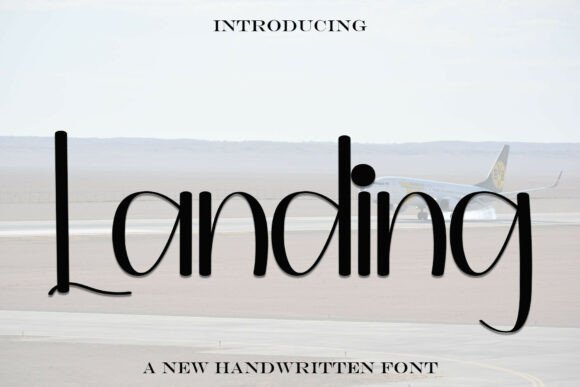
Landing: A Sweet Script Handwritten Font for Joyful Branding Projects
Landing for Logo Design: Adding a Romantic Touch to Brand Identities
Opening a new brand board always feels like a fresh start, and when I tested Landing on a logo concept for a local artisanal bakery, the results were unexpectedly charming. As a script handwritten font, Landing brings a gentle, personal feel that’s hard to replicate with more rigid typefaces. The soft curves and flowing strokes lend themselves beautifully to brand marks that need to feel approachable, warm, and emotionally engaging. I tried it on a minimalist logo for a small café, and it added a sense of intimacy and authenticity that a standard sans serif just couldn’t match.
Using Landing in Packaging Design for a Handmade Shop Branding Project
I recently worked on a packaging refresh for a boutique candle brand, and I wanted something that would feel personal and artisanal. I dropped Landing into a label mockup and was immediately drawn to how it elevated the product’s perceived value. As a script handwritten font, it felt like a signature—like the product had been touched by human hands rather than mass-produced. It’s perfect for packaging that needs to feel intimate, thoughtful, and slightly whimsical. That said, I wouldn’t recommend it for detailed nutritional labels or small print packaging—this is a display font at heart, not a workhorse for long body copy.
Landing on a Brand Board: Pairing with Modern Typography for Visual Balance
One of the biggest challenges with Landing is keeping the overall design from feeling too soft or overly sentimental. I found that pairing it with a clean sans serif like Montserrat or a serif like Playfair Display helped ground the brand board and maintain visual hierarchy. Since Landing is a handwritten font, it shines best when used sparingly—like for brand names, taglines, or accent text. I used it for the brand name on a creative studio’s identity board and paired it with a modern sans serif for subheadings and body copy. The contrast gave the design both warmth and structure.
Testing Landing in Web Design and Social Media Layouts
When I dropped Landing into a homepage hero section for a wellness brand, the header instantly felt more inviting. The font’s gentle rhythm and romantic undertones made the site feel more personal and emotionally resonant. However, I noticed that at smaller screen sizes, the cursive nature of the script handwritten font made it slightly harder to read on mobile devices. I ended up using it only for large headers and hero text, not for buttons or body content. On Instagram layouts, though, Landing performed beautifully—especially in quote graphics and brand announcements where a soft, elegant tone was desired.
When Landing Works—and When It Doesn’t: Practical Design Observations
After using Landing across multiple design formats—business cards, packaging labels, logo variations, and digital banners—I’ve found that it excels in short, emotional text. It’s not ideal for long paragraphs or small print, and definitely not for formal corporate branding. If you're designing a brand that leans into joy, romance, or nostalgia—like a boutique, bakery, skincare brand, or wedding-related business—this handwritten font will elevate your visuals. But if your project requires high legibility, scalability, or a more serious tone, you’ll want to explore alternatives.
Font Pairing and Licensing Considerations for Landing
As with any commercial font, it’s important to test how Landing integrates with other typefaces in a broader design system. I found it paired well with both serif and sans serif fonts, especially those with a humanist or elegant structure. For a creative studio’s identity, I used it alongside a serif for headlines and a clean sans serif for navigation menus and captions. Also, be sure to check the licensing terms before using Landing in client work—especially for webfonts, packaging, or merchandise. Most premium fonts come with clear usage guidelines, but it’s always good to confirm whether it’s approved for commercial use, digital products, or print-on-demand applications.